Reflections from the 3rd Global Summit on Diamond Open Access in Conversation with PKP’s Mark Huskisson
DOI: https://doi.org/10.59350/07wz8-sfb35
We spoke with PKP’s Strategic Business Development Advisor Mark Huskisson about his experience at the summit – what he observed about the evolving open access landscape in India, how PKP software is being used, and what the broader PKP community should be paying attention to right now.
1️⃣ Big-Picture Reflections
Mark, thank you so much for joining me in this interview. What were your overall impressions of the summit, and how did it reflect the current momentum and priorities of the global diamond open access movement?
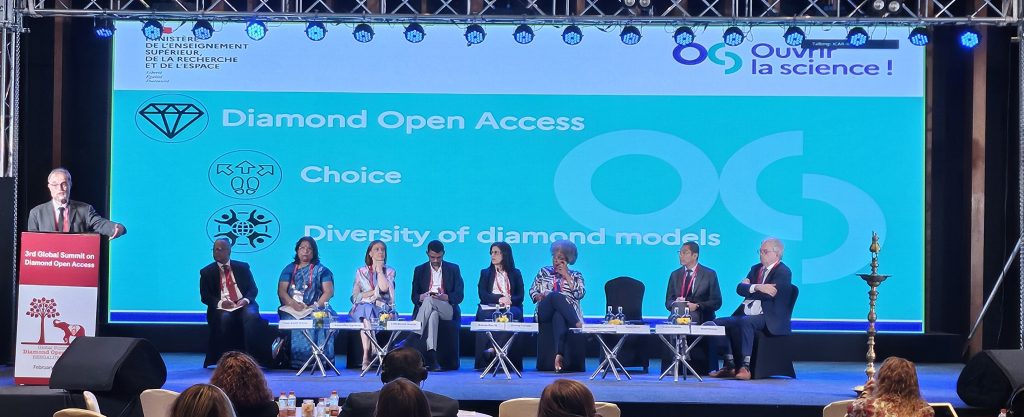
The 2026 summit came at an interesting inflection point in the global open access landscape. Moving beyond ‘why Diamond’ at previous events, this was a summit that shifted its stance to how Diamond OA can be delivered, operate, and be sustainable in our local contexts as part of the larger, interconnected global scholarly communications system.
The Diamond community was optimistic yet pragmatic during this summit. It feels like a movement that is maturing, finding a shared language and actions across regions, and beginning to confront the structural barriers that stand between real world scenarios and the ambitions of the Diamond OA community.
These pragmatic actions and language are needed as the community bumps up against the high barriers built by the commercial publishing industry. Despite Diamond being the dominant model across the Global South it faces ongoing challenges in developing and sustainable funding for infrastructure funding, and facing the difficulties imposed by the prestige metrics of the publishing industrial complex.
As Mylène Deschênes (Fonds de Recherche du Québec) said in her session, “Impact factors are the fast food of research assessment: you don’t have to think.” These research assessment metrics embed the commercial publishing system, creating a deep, protective moat around publishing business models, increasing the friction of the Diamond OA adoption.
But there was a sense of accelerating alignment over the four days of the event. Building on the community-building achieved at previous summits, there was much evidence of constructive and converging inter-regional policy and action. The summit also faced up to the realities of governance, research assessment, and achieving sustainability for national, regional, and global Diamond OA infrastructures.
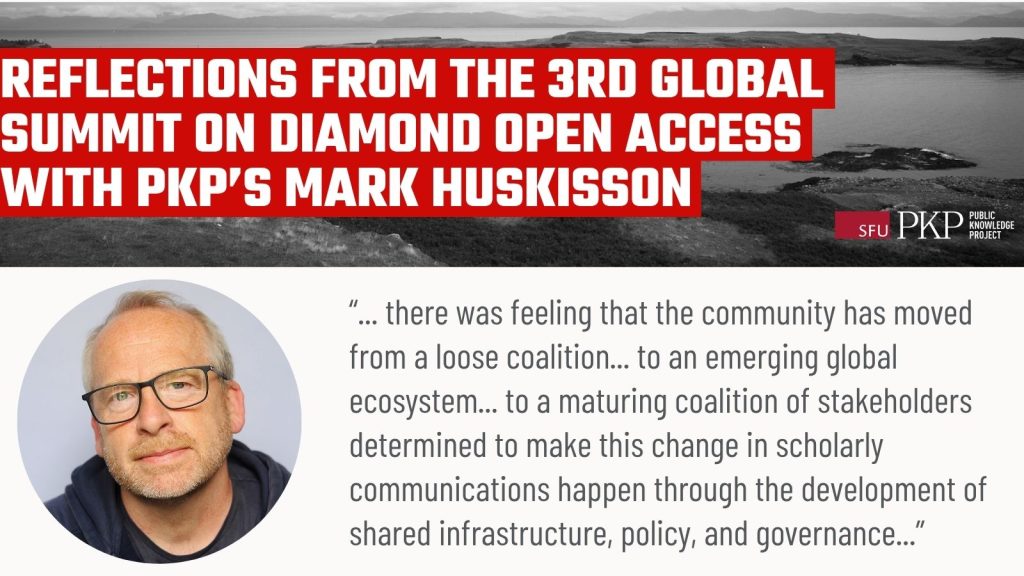
Within the room there was feeling that the community has moved from a loose coalition in Toluca (2023), to an emerging global ecosystem in Cape Town (2024), to a maturing coalition of stakeholders determined to make this change in scholarly communications happen through the development of shared infrastructure, policy, and governance in Bengaluru, India this year. This summit was not just a host to an alternative publishing community, but helped advance a framework for re-designing scholarly communication around the public good.
2️⃣ The Diamond Open Access Landscape in India
From your conversations and observations at the summit, what stood out to you about the open access publishing landscape in India — particularly in terms of infrastructure, policy support, and institutional engagement?
The very fact that the summit was held in Bengaluru and organised by a coalition of Indian research institutions, science academies, and university bodies was itself a statement of India’s institutional seriousness. This was not an externally-imposed gathering on Indian soil; this was substantially Indian-convened. And it was a much richer event because of that.
Landscape
As you might imagine, for a country of its population, economic and academic power, and heterogeneity, India’s open access ecosystem is incredibly diverse, encompassing funder mandates and national repositories that coexist with society-run Diamond journals, and a growing preprint culture. With a massive research output and large OA participation many scholarly journals in India already follow the Diamond model but often face challenges related to visibility, technical infrastructure, and sustainability.
This was reflected to a degree by the summit hosts that included ICAR-DKMA, ICAR-IIHR, CSIR-NIScPR, and INFLIBNET, as well as the the Society for Promotion of Horticulture (SPH) that hosts IndiaRxiv and IndiaJOL. This may be a reflection that India’s Diamond OA institutional ecosystem is clustered in agricultural and life sciences, where the community-led publishing tradition runs deepest.
Policy
India’s policy landscape is one of great energy with a history of repeated policy discussions, but suffers from a persistent structural gap, the lack of a comprehensive national open access mandate. India’s system is institution-driven and heterogeneous.
The timeline of intent is a lengthy one in India. The most significant policy development in the lead-up to the summit was the One Nation One Subscription (ONOS) initiative, which became fully operational in January 2025. ONOS provides access to journals from 30 major international publishers to over 6,300 government-run institutions for 2025 – 2027.
ONOS created a clear tension at the Diamond OA Summit. ONOS makes huge amounts of paywalled resources widely available to Indian researchers enhancing previously unseen levels of access, but risks sidelining investments in sustainable OA infrastructures such as Diamond OA journals and repositories.
The IndiaRxiv community argue that ONOS’s reliance on subscription models reinforces the dominance of commercial publishers and does little to promote the principles of OA, and that India must view ONOS as a transitional measure while investing in building a robust, sustainable Open Access ecosystem centred on Diamond OA principles.
Infrastructure
IndiaRxiv and IndiaJOL (both via PKP software) stand as the two most visible community-built platforms. INFLIBNET and Shodhganga represent India’s most scaled institutional repository infrastructure. There are now over 500,000 theses added to Shodhganga demonstrating what is possible when a national mandate is paired with sustained infrastructure investment. Further, journals published under the Council of Scientific and Industrial Research – National Institute of Science Communication and Policy Research (CSIR-NIScPR) on the DSpace platform are exempted from both APCs and subscription charges.
Thus, the Bengaluru summit cast India in an interesting dual role: as a country whose open scholarship community has enormous depth, organisational infrastructure, and policy ambition to host and shape a major global movement, and simultaneously as a country facing some of the most acute structural tensions in that movement.
The summit’s significance for India was that it placed this global tension between enabling access at scale through initiatives such as ONOS which could potentially entrench the system that Diamond OA is trying to tackle on the global stage, but firmly positioned Indian institutions, through the ensuing Bengaluru Roadmap, as co-authors of the answer.
3️⃣ Use of PKP Publishing Software in India
What did you learn about the adoption and use of PKP software in India, and how are Indian institutions or journal teams leveraging it to support diamond open access publishing?
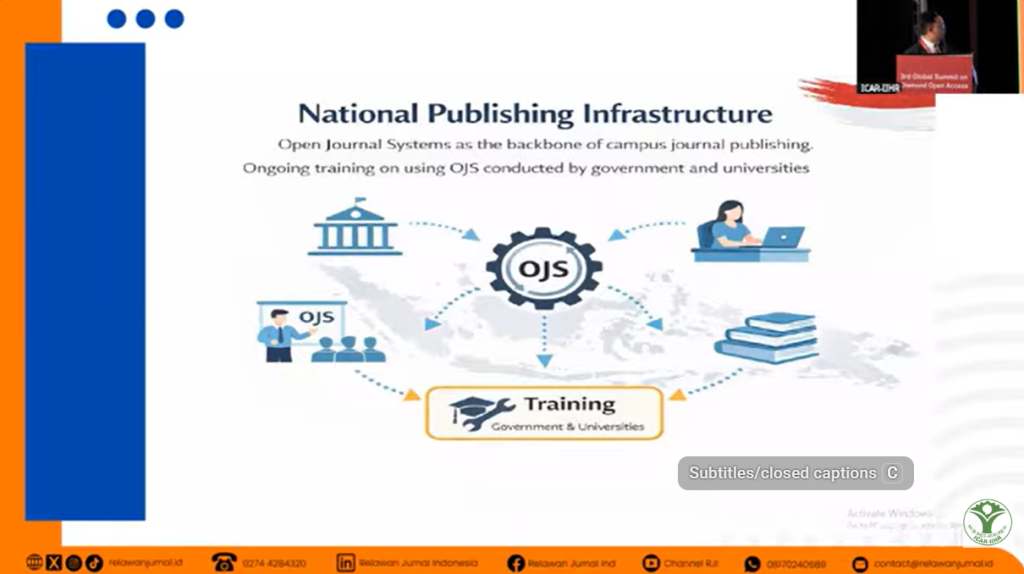
India’s engagement with PKP software spans all three products: Open Journal Systems (OJS) for journals, Open Preprint Systems (OPS) for preprints, and more recently Open Monograph Press (OMP) for monographs and long form publishing. Since the country’s most significant PKP deployments are often built by a determined community with over 1,600 journals on OJS, let’s highlight three new initiatives.
IndiaRxiv, a national preprint server built on OPS, is a moderated, multidisciplinary preprint server accepting English and Indian-language submissions of research articles, review papers, datasets, monographs, and more.
The brand new IndiaJOL (India Journals Online) is a diamond OA platform built on OJS, with publications forthcoming, as it is in early-stage development. It is designed to support scholarly societies, providing hosting, technical support for journal setup and workflow management, guidance on metadata optimisation, compliance with DOI standards and XML-based formats, and DOAJ indexing support. Tailoring support for Indian scholarly societies acknowledges that many of India’s community-run journals are published by learned societies with limited technical capacity, and IndiaJOL aims to give them a turn-key route to professional digital publishing.
INFLIBNET’s OJAS (Open Journal Access System) is a universe of individual, distributed university installations guided by Indian universities in adopting OJS for hosting their institutional journals. A dedicated platform to host journals using OJS as a centralised hosting service and discovery gateway specifically for Indian academic journals automatically indexed by major discovery services such as Google Scholar, OpenAlex, OAISTER, and ARC, OJAS ensures these journals are visible to the global research community and interoperable with other open infrastructures.
INFLIBNET provides extensive documentation on OJS for full setup (journal creation, user roles, workflow configuration, and submission management) with the material being incorporated into national library science training curricula. This reflects INFLIBNET’s strength as an educational and standard-setting body, where its support for OJS has historically been more training-oriented than operationally hosted.



Supporting Diamond OA
The OA movement in India was pioneered by some of the earliest and most influential global open access advocates such as Subbiah Arunachalam who first articulated the equity argument for open access in India in the late 1990s. This work continues through IndiaRxiv and a generation of younger scholars and policy researchers such as Muthu Madhan, known for Diamond OA advocacy and building IndiaRxiv and IndiaJOL on PKP infrastructure; he has done an enormous amount of platform-building work.
This torch is now carried by Sridhar Gutam, the Convenor of Open Access India and the principal organiser of the Bengaluru Summit itself, reflecting that IndiaRxiv, IndiaJOL, and the Diamond OA Summit exist as expressions of the same community of practice.
Sridhar Gutam now drives Open Access India and was the principal organiser of the Bengaluru Summit itself, reflecting that IndiaRxiv, IndiaJOL, and the Diamond OA Summit exist as expressions of the same community of practice. Known for Diamond OA advocacy and building IndiaRxiv and IndiaJOL on PKP infrastructure, he has done an enormous amount of platform-building work.
Challenges
There were many candid reflections about the challenges that face the Diamond community in India at the Summit, concentrating on visibility, technical infrastructure, and sustainability. Many sessions focused on improving journal quality, metadata standards, indexing, and global visibility through platforms such as DOAJ, OpenAlex, and other open science tools. Crossref highlighted this in specific technical terms, noting that their current collaboration with PKP on helping the community transition to the latest supported version of OJS will directly help many Indian publishers capture and register richer metadata, a foundational problem that limits the discoverability of Indian Diamond journals globally.
4️⃣ Sustainability and Business Models
Diamond open access often raises questions about sustainability without APCs. What innovative funding or governance models did you encounter at the summit that could be relevant to PKP communities?
India has all the ingredients for a thriving national PKP-based Diamond OA infrastructure. The thousands of journals in the region represent a community with deep ideological commitment, national institutions with hosting capacity, a network coordination body (INFLIBNET), a developing domestic commercial service sector, active Crossref and DOAJ ambassadors, and now international visibility from convening and hosting the third Global Diamond OA summit.
What it appears to lack is the institutional investment, policy mandate, and coordinated capacity-building to scale these ingredients into a coherent national publishing commons. As a collective, it seems we already know that we need to make as much a call to action for Indian funders and government bodies as we do for the international Diamond OA community.
Diamond OA sustainability was a core question for the summit where the sentiment that the risk is not that Diamond OA will fail for lack of idealism, but that the movement’s energy will flow into new initiatives rather than sustaining the less glamorous infrastructure that actually makes publishing and its discovery work. OJS is that infrastructure for a significant portion of the world’s Diamond OA journals and funding models discussed at Bengaluru, if implemented, could provide the community with the stable, diversified, regionally-grounded funding base it currently lacks.
Models of funding discussed included the Public Funder Model in a presentation by Marin Dacos (French National Open Science Coordinator) and Zoe Ancion (ANR – Agence Nationale de la Recherche) using France as a reference case. The French national model explicitly includes supporting shared international Diamond OA infrastructures as a public policy priority, not just a domestic priority. The principle being that Diamond OA infrastructure should be treated as a matter of national science policy rather than left to market forces or individual journal fundraising. France has operationalised this view and using the Bengaluru Summit as a navigational reference other governments could or should follow suit.
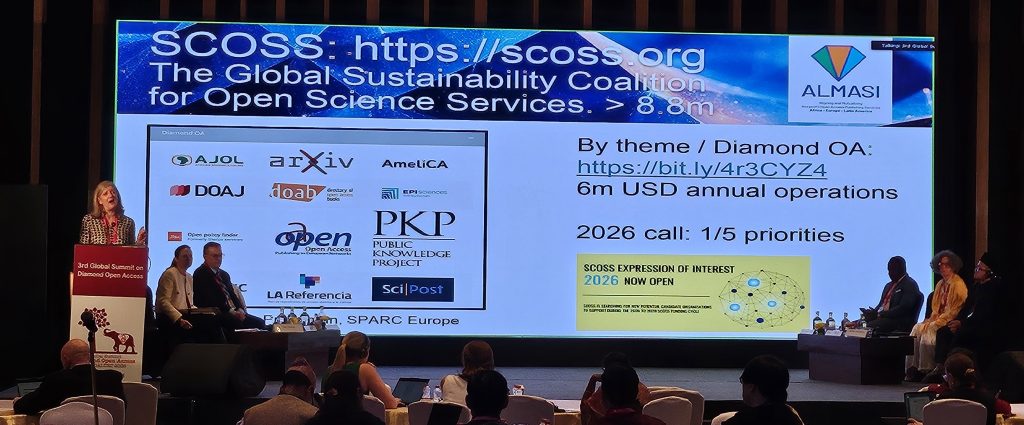
SCOSS (the Global Sustainability Coalition for Open Science Services) was cited repeatedly at the summit, both as a working model and as an example of what needs to expand to new regions. SCOSS’s philosophy is that open infrastructure is sustained collectively, built from many individual decisions. This model provides a mechanism for libraries and institutions worldwide to contribute small amounts to sustain shared infrastructure, with SCOSS acting as the coordinating and vetting intermediary.
Vanessa Proudman (SPARC Europe) made a passionate call from the stage for the funding and support for all open infrastructures that underpin this enormous global activity but are largely overlooked. This support, through the SCOSS model and others, is critical for the health and vibrancy of DiamondOA.
Latin America has nurtured a thriving Diamond model where scholarly communication is financed primarily with public funds for education and research through academic institutions, and where the academic sector acts as the principal owner of scientific journals. AmeliCA formalised and extended this into a cooperative, controlled by a broad-based inter-institutional academy, led by Redalyc and CLACSO with UNESCO support. This offers a transferable model for regions like South Asia that are trying to build regional Diamond OA cooperatives from within public academic institutions rather than through external funder grants.
Operating at the journal level rather than infrastructure level a newer model surfaced at the summit from the German-French KOALA programme, operated by TIB (German National Library of Science and Technology) and KIM (University of Konstanz) in partnership with Episciences in France. KOALA introduces journal-level financial support through discipline-based bundles, with institutions committing to three-year agreements at tiered annual contributions depending on institution size, receiving a single annual invoice from TIB that provides journals with three years of stable funding used for professional copyediting, typesetting, proofreading, and dissemination.
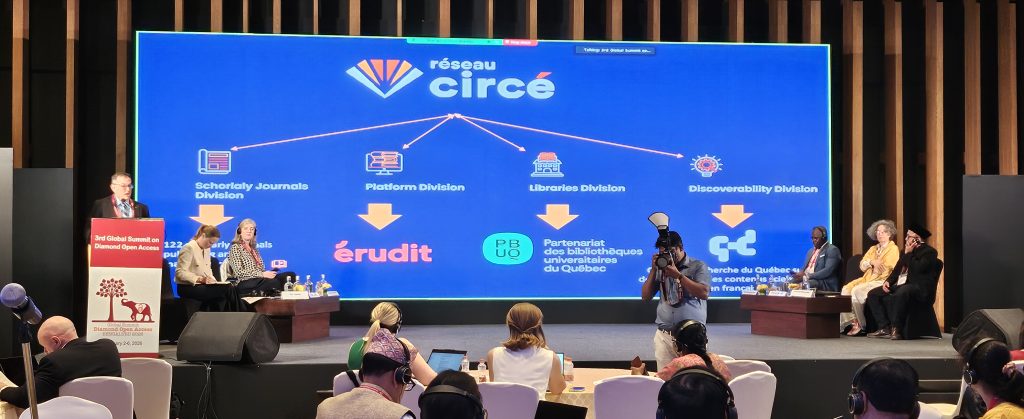
The Partnership for Open Access (POA) between CRKN and Érudit appeared in Katina Magazine in the lead-up to the summit and received a lot of attention. Érudit provides a platform hosting over 243 journals while CRKN coordinates collective investment from Canadian university libraries, with the model expanding internationally through agreements with the Couperin consortium in France and Belgian library partners; as of 2026 the POA will be supporting 280 scholarly journals.
The Canadian nationwide network of library publishing programs hosted in university libraries could provide a library-as-publisher model at national scale, and represents something directly replicable using OJS: INFLIBNET in India, or equivalent national library networks.
Beyond funding specifically, the Summit advanced the idea of regional capacity hubs as the organisational unit of Diamond OA governance. The European Diamond Capacity Hub (EDCH) works alongside other regional hubs like Redalyc-AmeliCA and AJOL in Africa as gateways to the global Diamond OA community, providing services like a registry and forum, quality self-assessment tools, a discovery hub, training platforms, and publishing tools like software add-ons. The architecture being built is explicitly federal: regional hubs aligned with global standards but governed locally to reduce the overhead and friction in establishing and sustaining Diamond OA initiatives.
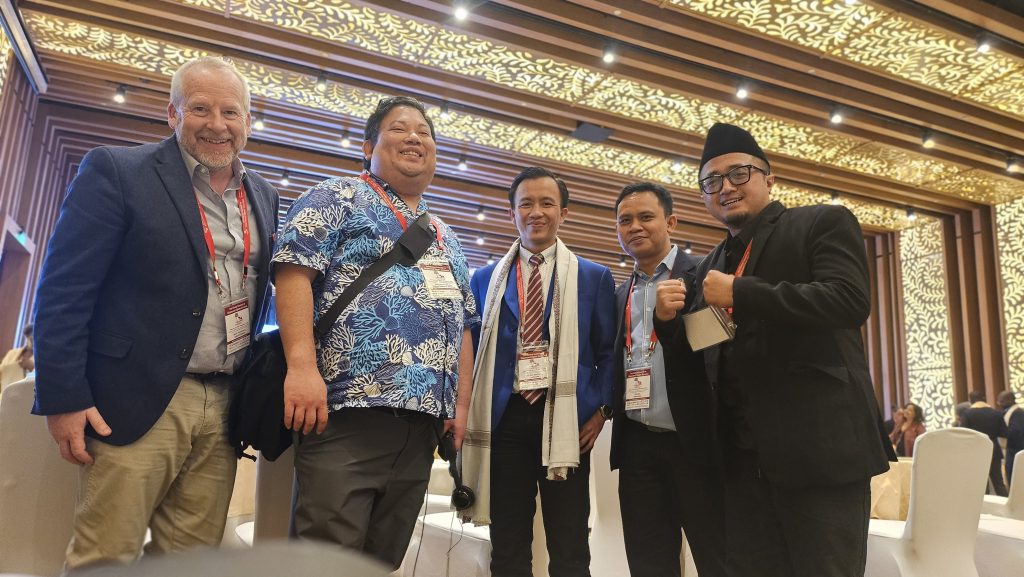
The presence of RJI (Relawan Jurnal Indonesia), WACREN (West African Research Network Infrastructure), AmeliCA, and EDCH in Bengaluru increased visibility for this model as a nascent working governance reality rather than just an aspiration of the movement.
5️⃣ Key Takeaways for PKP Communities
What are your top takeaways from the summit that PKP communities should be paying attention to right now?
The five pillars of the forthcoming Bengaluru Roadmap are not abstract principles. Each one maps to concrete things PKP does or is actively pursuing, and to partnerships the community is already building. That gave me real confidence about PKP’s own mission and direction. The pillars being:
- Reimagining scholarly communications for equity and multilingualism;
- Building and sustaining Diamond OA infrastructures;
- Publishing platforms and services;
- Metadata standards and persistent identifiers;
- Responsible research assessment.
The focus on metadata and interoperability in particular aligns closely with PKP’s development agenda: richer structured metadata, contributor role taxonomy, dataset citation links, greater integration, and persistent identifiers. Alongside the CRAFT-OA and ORE work already delivered in OJS 3.5 and the upcoming OJS 3.6, it was a genuine filip to know that the hard work of the PKP team and community is in lockstep with the direction of the global Diamond OA leadership.
The summit’s emphasis on metadata quality also brought into sharp relief an underlying problem: a very large proportion of the world’s OJS journals are running outdated software that quietly undermines their visibility and long-term sustainability. This technical debt manifests as poor discoverability, perceived inconsistency or poor production standards, and low measurable impact.
Most of these discoverability and quality issues are not editorial. They are technical and they are fixable. PKP and Crossref have already begun a joint LTS migration programme, but the scale of the problem across India, Indonesia, and much of Asia and Africa is far larger than that programme currently addresses. It is, however, a great start in a valued partnership.
The governance picture is also evolving fast. The proposal for a national and regional hub structure is gaining real traction. The UNESCO Global Alliance for Diamond OA, the European Diamond Capacity Hub, AmeliCA, AJOL, and vibrant Southeast and South Asian communities like Relawan Jurnal Indonesia and TCI in Thailand are together building a federal governance architecture: regional hubs operating with shared global standards. PKP sits squarely within that architecture as essential shared infrastructure.
Perhaps the summit’s most charged consensus was that Diamond OA cannot scale while research assessment systems continue to reward publication in commercially-indexed journals. This is not a new observation, but Bengaluru was notable for connecting it directly to practical mechanisms.
In particular, sessions by Ashley Farley’s (Gates Foundation) Responsible Research Assessment as a pathway to Diamond OA, were supported by the DORA network and the growing CoARA coalition in Europe. It was a timely reminder that PKP’s Publication Facts Label (PFL) – a standardised transparency label embedded directly in the publishing platform, designed to help researchers, institutions, and funders make more informed decisions about where to publish and what to trust – is precisely the kind of easily implemented tool that journals need. While assessment reform gains institutional traction worldwide, the PFL deserves to be much more widely known and used.
On funding, the candid picture is that models and mechanisms for sustaining open infrastructure continue to evolve, but the actual resourcing consistently lags behind the stated intent. Put simply, investment in PKP does not yet reflect the full scale of its role and impact, given that PKP tools underpin the vast majority of the world’s Diamond OA publishing.
Kora Korzec, writing on behalf of Crossref, highlights the summit’s call for governmental support for Diamond OA as a matter of global commitment and shared responsibility. DIAMAS is a framing that closely resembles this commitment, which argues for supporting Diamond OA is a shared responsibility among institutions, funders, sponsors, donors, and policymakers, and that their coordinated efforts are essential for long-term sustainability.
This piece raises a question I found myself sitting with: do PKP communities around the world realise that our shared work will now be recognised in a global governance document? That recognition creates both accountability and leverage. A leverage that communities can use to argue for the institutional and funder support needed to sustain this work in their own specific local contexts.
Finally, the summit’s emphasis on multilingualism was about far more than courtesy translation. It was a structural argument: that the global knowledge system is impoverished when most of its infrastructure assumes English as its operating language. This signalled clearly to me that bibliodiversity through multilingualism is not a peripheral concern – it is a core driver of Diamond OA adoption globally, and one that PKP, with OJS already available in over 60 languages, is uniquely well positioned to support.
For four days in India, a lot was covered. And a lot was achieved. Amongst the many many things mentioned above a lot of new friends were made and ideas for collaborations were seeded. It is down to the community to ensure that we now establish a fertile environment for this ecosystem to really flourish. As we identified at the outset, we have moved well beyond the argument for “why”, and now firmly set our collective sights on delivering Diamond OA for the public good, ensuring that scholarly communications drives equity and global reach.
Thank you so much Mark, for this very thorough and insightful interview highlighting the regional landscape, infrastructures, sustainability, partnerships, calls to action and more!
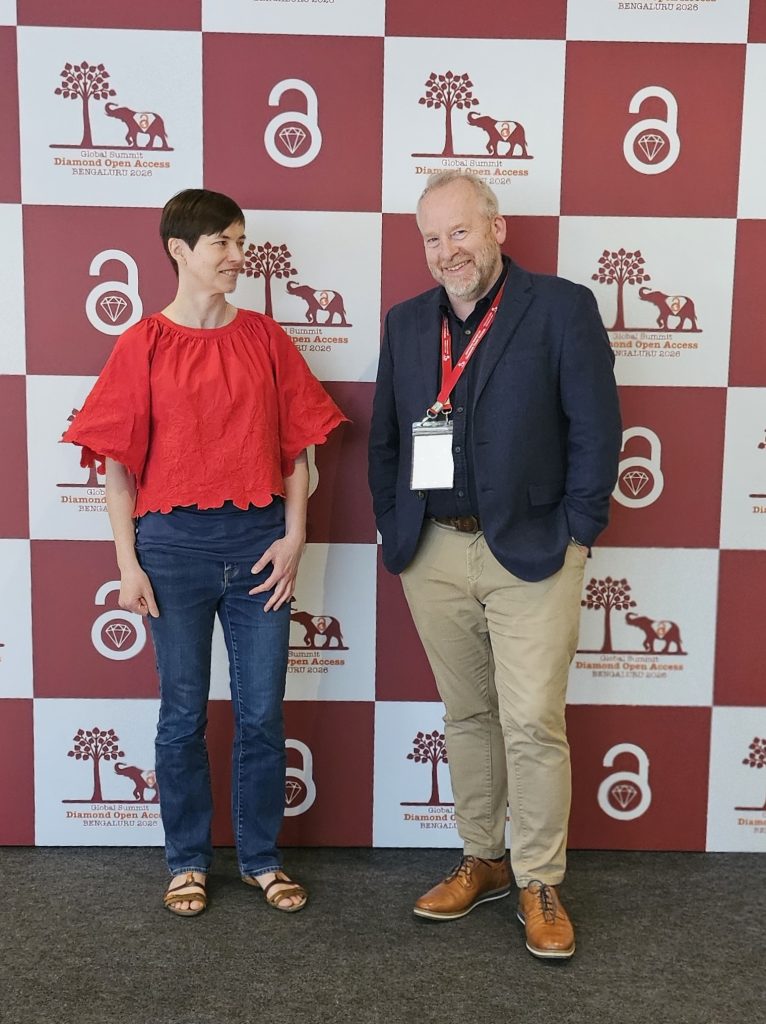
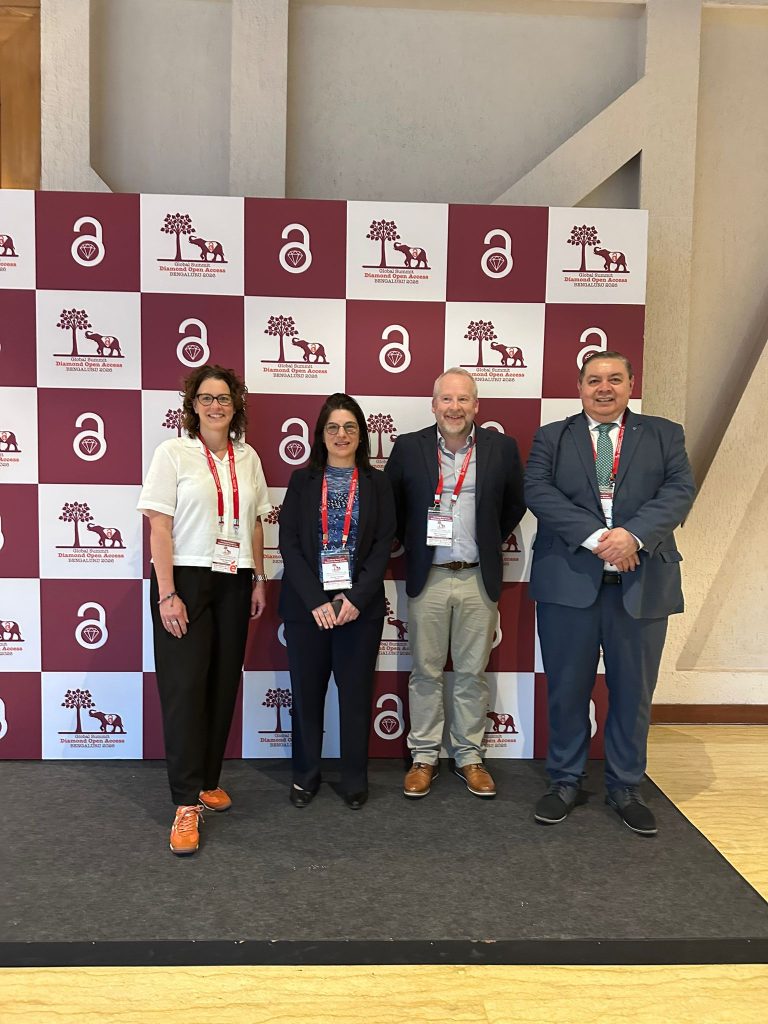
Photos from Mark (hover over a photo for the caption). Slides are from the YouTube recordings: